
Category: Psychotherapy
Successful therapy begins with finding the right match between client and therapist. A good therapist will begin your treatment by establishing trust and investing in you.
Psychotherapy is based on regular personal interaction, to help a person change their behaviors and overcome problems in a desired way. It is a form of intervention between a psychotherapist and client that hopefully resolves in the client gaining new insight about their problems.
Psychotherapy is about opening up to a therapist about your struggles, in a way that allows your therapist to hear and empathize with what you are going through. Therapists often practice active listening, taking an objective stance and giving their clients useful tools and information to try to make real and meaningful changes in their lives.
A therapist can help you resolve a variety of mental health issues, such as depression, anxiety, trauma, addiction, relationship problems and anything else you may be struggling with. Psychotherapists are trained in a variety of techniques called treatment modalities in order to help their clients to get through whatever they are faced with. These changes can be made through open communication, behavioral changes, understanding patterns, changing perspectives, finding solutions and other methods a therapist may use to help improve a client’s quality of life and mental state.
Many different types of professionals practice psychotherapy – Licensed Clinical Social Workers are one type of professional.
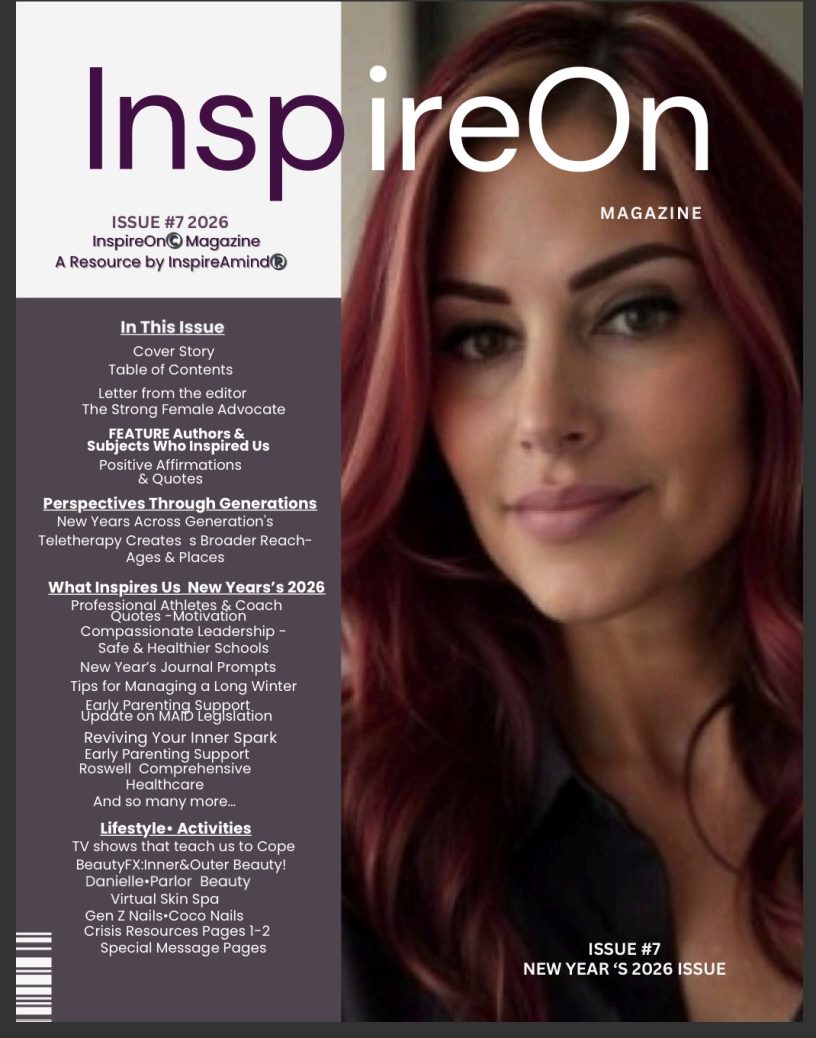

The New Year: Reflections on Growth, Gratitude, and Renewal
Each New Year, I like to pause and reflect—especially on the interview I did back in 2023 about New Year’s resolutions. Revisiting the chapters of my life has shown me that most things, even the difficult ones, carried purpose.
I’ve gained self-esteem that had far less to do with appearance than I once believed. My greatest achievements aren’t defined by accomplishments or accolades—they’re the people in my life: my husband, my children, my dad, and the closeness I share with my husband’s family. Over time, I’ve learned who my true friends are, even when that truth means relying more on them than on extended family.
Lessons from a Lifetime (So Far)
More than half a lifetime of learning has taught me the value of my career identity , forgiveness, impulse control, curiosity, and the courage to keep learning and asking new questions. And from my mom, I learned spirituality. Long before mindfulness became a trend, she lived it—believing in a higher power, a higher standard, and a higher level of thinking. She just didn’t always apply it to her own stress.
I see so much of her in me: her work ethic, her selflessness, her love for her career, and her advocacy.
From my father, I learned something unexpected. He always cared deeply about his patients, but I didn’t truly see the “social worker” in him until I worked alongside him during Covid. I watched him listen—really listen—to people having tough days. I saw the man who quietly supported struggling employees, who found joy in making others smile (which is poetic, given that he’s a dentist).
Those experiences helped shape my understanding of compassion, patience, and what it means to show up for others.
The Truth About Resolutions
I’ve come to believe that healthy, successful living isn’t about setting one big resolution for January 1st. Instead, it’s about creating fluid goals throughout the year. That’s how we grow happier, more fulfilled, more grounded.
If we wait for one single date, we end up fizzling out—just like those gym memberships that start strong in January and fade by February.
Of course, there is something powerful about January 1st. Maybe it’s the promise of renewal. Maybe it’s the hope of a fresh start. Or maybe it’s simply tradition—a day when we pause long enough to reassess where we’re headed. Whatever it is, it draws us in.
Embracing the Cycle of Life
Whether this past year brought grief or joy, illness or improved health, change or stability, it’s all part of the cycle of life. As we grow older, we inevitably gain wisdom and learn to take each day as it comes.
Be grateful for what you have… because it could always be less.
So as we move into a new year, celebrate what you’ve accomplished. Honor the people you love and the people you’ve lost. And remember that seeking support—whenever you choose—is an act of strength.
Wishing you a happy, healthy New Year! 🥂
Here’s to renewal, growth, and hope.
InspireAmind.net

Screenshot

Look for products that help us stay calm within… https://ctrk.klclick.com/l/01K9QVQDW57MTDR93JFF375XZZ_0

Click link above


Mental Health Isn’t a Bonus – It’s a Basic Need
For 18+years, I’ve worked as a Clinical Social Worker in schools, nonprofits, crisis response, and private practice.
One truth has never changed: mental health is not optional.
Yet even in 2026, too many schools and companies treat mental health as an “extra” — nice to have if there’s a little budget left over, like a yoga class or free snacks. You can tell by reading or watching the news that …
That mindset isn’t just outdated — it’s dangerous.
We seem to invest in physical wellness everywhere: gyms, virtual reality, standing desks, wellness rooms. Why? Because healthy bodies = higher productivity, less absenteeism, more profit. Mental health works the same way.
In the same way, people that have access to consistent, quality mental health care, they’re more focused, more productive, and more motivated. Absent this essential wellness piece, the same or more burnout, absenteeism, conflict, and even violence — in schools, workplaces, and high–stakes industries like sports and entertainment have become common in the last 20 years.
Think about it: elite athletes and C-suite executives rely on their mental readiness to perform. They get therapy.
QUIETLY… Shhhhhh.
However, in many cases the professionals supporting them often earn a fraction of other critical roles, despite carrying heavy emotional responsibility.
Becoming a MSW Master Social Worker (MSW) costs over $160,000 in state education ( for an undergraduate degree) then a further two year graduate degree for MSW licensing – and yet at the start … salaries barely touch student loans.
For a License in Social Work $275.00 for LMSW
Example : graduate …
- 60 credits
- 900 total practicum hours (420-hour foundation practicum + 480-hour advanced year practicum)
- Offered full time (2 years) or part time (3 years)
Graduate costs fluctuate-
This is not sustainable in the future!
If we don’t advocate for change – the next generation of talented, passionate mental health professionals will look elsewhere.
The new generation
•inspired by us
•High-risk of burnout
•Risk of higher turnover rates
• In search of for less demanding
•looking for higher-paying work .
RESULT – The system suffers. People Suffer!
Here’s the bottom line:
- Mental health isn’t a luxury – it’s foundational.
- It belongs in every system, just like physical health.
- Professional’s doing this work deserve pay that reflects their impact — including help with student loans.
We must invest in care, not crisis.
People going to therapy shouldn’t be visible — it means it’s working. It means they’re safe and learning skills to thrive.
Mental health care is the bedrock of our society. Let’s value the professionals who provide it – because they matter.
YOU ARE WORTH IT!
#MentalHealthlsHealth #BuildUSUp #SupportTheSupporters


Therapy – Motivation
Change
Change
Each year, things change—from the newest trends in fashion and home decor to small and large changes in our jobs, at home, in some of our friendships, and on the greatest scale, societal or government regulation changes. Many of these things impact us differently. Since the most recent pandemic, war, national unrest, or even a recent tragedy your family may have gone through (such as illness, severe weather, violence), we tend to look at things differently on the other side.
The most important thing to remember is who we are, and if we didn’t know, we do now. What shapes us into who we are is our character, our hardships, and how we face those challenges and move forward. More than ever, reality TV is perpetuating PTSD with shows like the final Squid Games (June 2025) and others that seem voluntary but make people completely vulnerable and captive. Our society of violence already provides that (through movies, books, and our never-ending supply of real-life mass shootings). I don’t mean to say that people haven’t come together and formed united fronts on this, but the burden is heavy. When you think of fashion or the color of your decor as being too much, stop thinking and enjoy the moment.
Perspective
The majority of my practice today centers around anxiety and continuous thoughts of worry. People of all ages have begun to get out of their heads and realize it is okay to get help during or shortly after the pandemic. Our teens today will never have the same life experiences as those of us who never had our schools shut down during their time to learn social skills and lay the groundwork for their academic future. We must allow for these differences but not excuse them; we have to teach what was not taught. In between, as young adults struggling in this world with uncertainty, I remind you that nothing has changed: illness, war, shootings, and hardship have always been there. It is how you choose to educate yourself, rise above, and shine beyond the pale that matters. Learning to utilize support and continue on is a way of life! You’ve got this!
Do not give in to fear. Expect it, control it, and live your life.
Self-Talk
Self-Talk / Mindset
Practice positive self-talk; treat yourself as though you believe in yourself. Be someone you would want to stay friends with. Once you treat yourself with respect, you’ll find forgiving yourself for small things you typically question to be trivial. Practice treating others with care. We never know what has happened in someone else’s world. Not everyone brings their personal life into each conversation. Knowing this, we need to respect people’s boundaries, bad days, and tough moments. Look a little deeper this year while at the same time feeling a bit lighter! Perspective can create a whole new mindset
InspireAmind®️
Inspiring One Mind at A Time!
Welcome to 2025-2026
Marcy Abramsky, LCSW
InspireAmind.net
AbramskyInspireAmindcoach.com

It doesn’t take a whole new routine to instill a dose of happiness into your day—but it does take a little self awareness.
1. Be grateful for the good & the bad.
Research shows, grateful people are happy people. It’s also important to understand that happiness is not the absence of negative feelings. Gratitude is a focus on the present and appreciation for what we have now, rather than wanting more. Embracing gratitude, as a state of mind, can have a positive affect on all aspects of life including our happiness and overall satisfaction.
Up your mood by taking a moment daily to think of your world with gratitude. Start a gratitude journal or take a walk in nature paying attention to all the gifts around us. Think of a person that helps you on a daily or weekly basis – a spouse, parent, friend, pet, teacher, cleaner, or babysitter.
Quiz: How grateful are you? Take the Gratitude Quiz published by the Greater Good Science Center at UC Berkeley.
2. Flex your creativity muscles.
Do you have a passion or hobby? It doesn’t have to be a formal activity, simply engaging in creative thinking can enhance well-being by enhancing cognitive flexibility and problem-solving abilities. A recent study out of New Zealand, published in The Journal of Positive Psychology explains that creative activities can trigger an “upward spiral” of well-being.
“Practicing an art — no matter how well or badly — is a way to make your soul grow. So do it.” – Kurt Vonnegut.
Make some space in your day to create, even if it’s just for the sake of it. Try exploring unique textures or even natural and recycled materials to make something for your home or a friend. Looking for some tips on how to add more creativity into your daily life? Read this list of 101 creative habits to explore.
3. Get connected, Stay connected.
*If you Like this then check out
The Real Friends Reboot Blog!
Being apart of something larger than yourself can help bring perspective as well as a sense of belonging. Scientific evidence strongly suggests that feeling like you belong and generally feel close to other people is a core psychological need; essential to feeling satisfied with your life. The pleasures of social life register in our brains much the same way physical pleasure does.
So take the time to nurture a friendship that is important to you. Make an extra effort to show you care, send a card, make a plan to have lunch, or give them a call and really listen to what they say. Smile and say hello to a stranger. Tell a story when someone asks how your day is going. Notice how you feel when you share something with someone new.
Struggling and need support? Join a support group and talk to others that can relate. Find your tribe: support.therapytribe.com – a free online support community brought to you by TherapyTribe.
 Tip: Check out the wellness tracker. It’s a simple but powerful tool designed to help you remember the promises you make to yourself. As you complete wellness activities your tree will blossom, and so will you!